
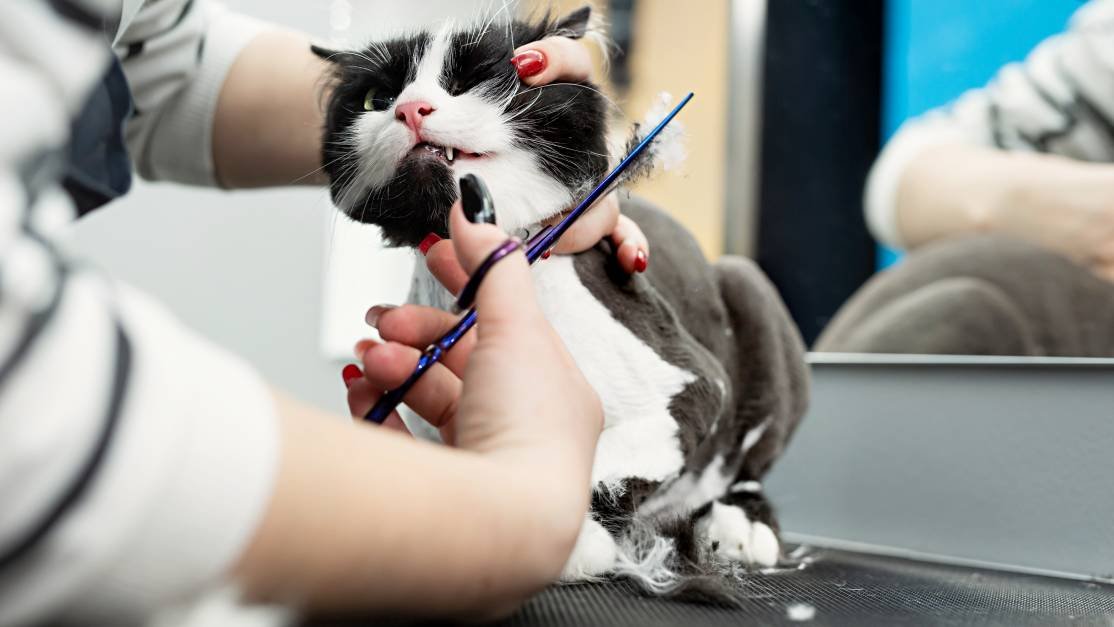
Cats are natural self-groomers, but that doesn’t mean they never need professional help signs like matted fur, unusual odor, dull coat, overgrown nails, and behavioral changes are your cue to book a grooming appointment. Catching these signs early prevents discomfort, skin issues, and bigger health problems down the line.
Most cat owners come to me saying the same thing, “But cats groom themselves, right?” and my answer remains yes, they do, infact cats are meticulous self-groomers. They spend a significant portion of their waking hours licking, preening, and keeping their coats in order. I know this, you probably know this, but here’s what most people don’t know until it’s too late self-grooming has limits, and those limits show up in ways that are easy to miss if you don’t know what you’re looking for.
I’ve worked with cats long enough to have seen what happens when those limits are ignored. I’ve had cats come in with mats so tight they’d been pulling on the skin for weeks. I’ve had cat parents genuinely shocked to learn their relaxed, quiet cat was actually uncomfortable. These aren’t irresponsible owners they just didn’t know the signs.
If you’re unsure whether your cat needs a groomer, this is the guide for you. Here are seven signs your cat needs grooming that most people overlook, and what to do about each one.
Sign #1: Their Fur Has Mats or Tangles You Can Feel (Not Just See)
In my experience, matted cat fur is the number one thing new cat parents discover too late. By the time they notice it visually, it’s often been there for weeks, tightening, pulling on the skin, and causing real discomfort.
Here’s the thing about mats: they don’t always form where you can easily see them. The most common hiding spots are behind the ears, under the “armpits” (yes, cats have them), and along the belly, all areas cats struggle to reach themselves. If you run your fingers through your cat’s coat and feel a firm, dense lump rather than soft fur, that’s a mat, not just a tangle.
A tangle is loose and gives when you gently work through it with your fingers. A true mat is compacted and often feels almost like felt. It won’t brush out at home without risking pain or skin damage.
I remember a gorgeous Maine Coon named Duchess that a woman named Patricia from the Lakeview neighborhood brought in. Patricia had assumed Duchess was “just a fluffy cat” and didn’t think much about grooming. When Duchess came in, she had severe matting along her entire underside hidden completely under that beautiful coat. Duchess had been uncomfortable for months.
If you have a long-haired cat and you haven’t run your hands along their belly and under their legs recently, do it today. If you feel anything that doesn’t give easily, it’s time to stop the DIY attempts and call a professional cat groomer.
Sign #2: You’re Noticing a Smell That Isn’t “Just Cat”
When a cat comes into my care smelling off, it’s almost never just dirt. There’s a normal “cat smell” mild, warm, a little musky, and then there’s something else entirely. Learning the difference matters.
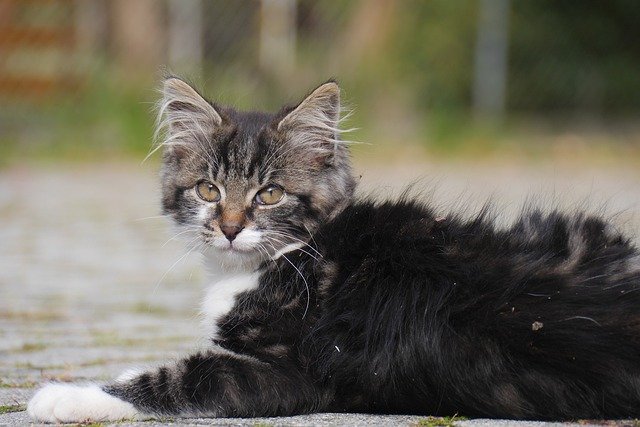
An unusual or strong odor coming from your cat’s skin or coat can point to several things: a buildup of skin oils, an early skin infection, problems with the anal glands, or even an ear issue. Cats are masters at masking discomfort, which means by the time a smell becomes noticeable to you, it’s often been building for a while.
What I’ve seen repeatedly is that owners dismiss the smell for weeks spraying air freshener, assuming the cat rolled in something when the source is actually a grooming or health issue that needs attention.
Here’s a simple rule: if the smell persists after your cat has had a normal bath or wipe-down, or if it’s concentrated in one area (base of the tail, ears, skin folds), that’s your signal. A groomer can identify whether the issue is coat-related or whether you need a vet visit first. When in doubt, call both.
Sign #3: Their Coat Looks Greasy, Dull, or Clumped Not Fluffy
A healthy cat coat has a certain sheen to it light catches it, it lays smoothly, and it feels soft to the touch, when that’s gone, something is off. Greasy patches, a coat that lies flat and heavy instead of fluffy, visible dandruff, or fur that clumps together instead of separating these are all signs of a compromised coat condition that regular brushing alone won’t fix.
This is especially common in two groups that people don’t always expect: older cats and overweight cats. Senior cats simply groom less efficiently as they age. And overweight cats this is a big one often physically cannot reach large sections of their own body.
Their lower back, base of the tail, and hindquarters are completely inaccessible to them. I’ve had more than a few cat parents bring in a chubby tabby confused about why their cat’s back half looks unkempt while the front half looks fine. That’s exactly why.
If your cat’s coat looks like it’s lost its usual luster or is developing greasy or clumped sections, a professional grooming session with a proper bath and blow-dry can reset the coat condition significantly. This also connects to why regular grooming is important for cats it’s not just about aesthetics, it’s active maintenance of skin and coat health.
Sign #4: Nails Are Curling, Clicking, or Snagging
“How do I even know when my cat’s nails are too long?” This is one of the most common questions I get from new cat parents, and it’s a fair one.
There’s actually a simple test: listen when your cat walks across a hard floor. If you hear a click with each step, the nails are too long. Another sign is snagging if your cat gets their claws caught in blankets, carpet, or fabric when they’re not intentionally scratching, the nails have overgrown past the point of comfort.
Overgrown cat nails are more than a nuisance. If left unchecked long enough, they can begin to curl under and grow directly into the paw pad. I have seen this firsthand, and I can tell you it’s painful and entirely preventable. Indoor cats are especially at risk because they have no natural surfaces that wear nails down the way outdoor activity would.
I once had a sweet orange tabby named Mango brought in by his owner, David, from the Bucktown area. David had never trimmed Mango’s nails and wasn’t sure how. When Mango came in, one nail on his back paw had already started curling inward. We caught it before it embedded, but it was close. A professional groomer can handle nail trims safely and calmly it takes minutes and makes a significant difference in your cat’s comfort and mobility.
Sign #5: Excessive Shedding That’s Leaving Bald-Looking Patches
Some shedding is completely normal. Cats shed seasonally, and if you own a cat, you’ve accepted that cat hair is part of your wardrobe. But there’s a line between normal shedding and something that warrants attention.
If you’re finding significantly more hair than usual, if your cat’s coat is looking thin or patchy in certain areas, or if you’re noticing what looks like bald spots developing, that’s a cat grooming sign worth acting on.
I’ve had owners come in genuinely convinced their cat had a disease. One that stands out is a woman named Renata from the Andersonville area who came in with her silver Persian, Luna, panicked that Luna was going bald.
What Luna actually had was severe coat neglect compounded by stress shedding, a combination that had created dramatic-looking but entirely manageable hair loss. After a professional de-shedding treatment, which involves specialized tools and techniques to remove the loose undercoat without damaging the guard hairs, Luna looked like a different cat within a single session.
That said, if bald patches come with persistent scratching, redness, or visible skin irritation, go to the vet first. A groomer addresses coat condition a vet addresses underlying skin issues. The two often work together, but the right order matters.
Sign #6: Your Cat Has Stopped (or Slowed Down) Self-Grooming
This one catches people off guard, because they’re not looking for the absence of behavior.
Cats groom so instinctively and constantly that when they stop, or significantly slow down, it often goes unnoticed. You have to actively look for it. Signs include a coat that’s looking increasingly unkempt without explanation, visible dirt or debris that your cat used to clean off themselves, or a dirty, matted bottom, which is almost always the first area to go when a cat stops self-grooming.
Why do cats stop grooming themselves? The reasons vary: joint pain or arthritis that makes reaching certain areas too uncomfortable, obesity (as mentioned above), dental pain that makes the act of licking painful, or even depression and stress. This is one of the most misread cat grooming behavior changes I see — many middle-level cat owners assume a less-active groomer is just a calmer, more relaxed cat. They’re not always wrong, but they’re also not always right.
If your cat used to be meticulous and now seems indifferent to their own upkeep, this is the sign that needs the fastest response. A groomer can manage their coat hygiene in the short term while you identify and address the root cause with your vet.
Sign #7: Behavioral Changes Irritability, Hiding, or Flinching When Touched
Cats don’t complain loudly. They go quiet. If a cat who used to enjoy being petted along the back now flinches, ducks away, or even swats when you touch certain areas, pay attention. If a social cat has started hiding more than usual, or a calm cat has become uncharacteristically irritable, that’s communication.
Matted fur pulling on skin constantly is genuinely painful. Overgrown nails affecting how a cat distributes weight are uncomfortable. Skin irritation from a neglected coat is distracting and aggravating. None of this shows up as obvious limping or crying, it shows up as mood and behavior shifts that are easy to attribute to personality rather than physical discomfort.
This is the sign most people never connect to grooming needs. Before assuming your cat is just having a moody phase, do a hands-on check of their coat and nails. You might find the answer.
“But My Cat Hates Being Groomed” Addressing the #1 Objection
I hear this constantly, and I want to be direct, resistance to grooming doesn’t mean skip grooming, rather it means find the right groomer.
Most cats who “hate grooming” have either had a bad experience, been handled incorrectly, or simply haven’t been desensitized to it from a young age. (If you have a kitten at home, this is exactly why starting grooming habits early is one of the best things you can do for their long-term comfort.)
A key thing to understand is that cat grooming and dog grooming are fundamentally different, not just in technique, but in temperament management, handling, and the entire environment. A groomer who primarily works with dogs may not have the specific skills to handle a cat’s unique stress responses.
If your cat has had bad grooming experiences, look specifically for cat-only or cat-specialist groomers. The difference in your cat’s experience is often significant. You can learn more about how cat grooming differs from dog grooming to understand why this matters so much.
How Often Should You Actually Be Booking Professional Grooming?
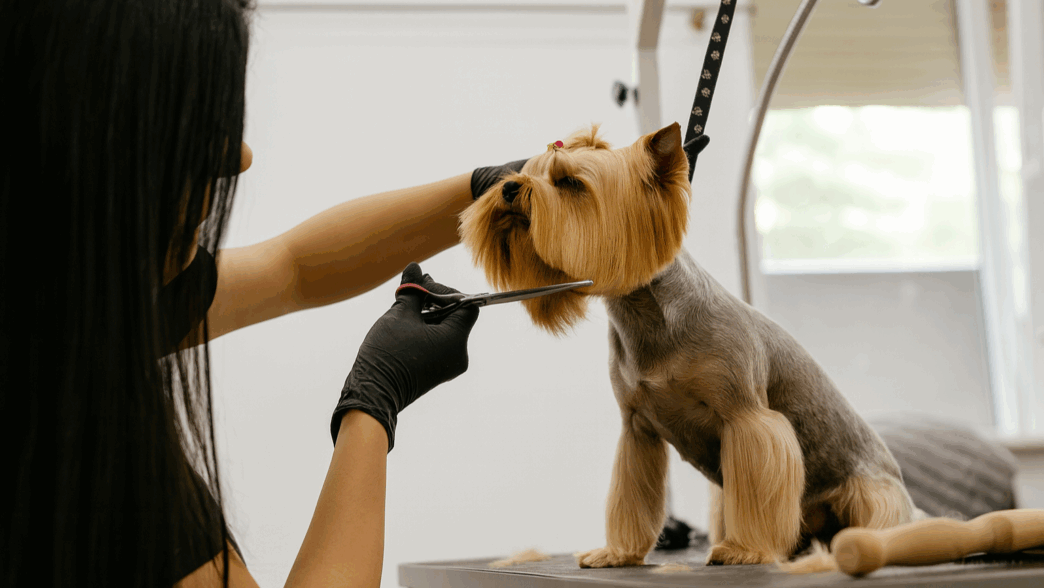
This is where I see a lot of confusion especially among cat owners who assume professional grooming is a one-time thing or only for “fancy” cats. Here’s a straightforward breakdown based on coat type and lifestyle:
Short-haired cats generally do well with professional grooming every 3 to 4 months. Their coats are lower maintenance, but they still benefit from professional de-shedding, nail trims, and a thorough coat check.
Long-haired cats need much more frequent attention every 6 to 8 weeks is typical for breeds like Persians, Maine Coons, and Ragdolls. Without that regularity, matting becomes almost inevitable. If your cat has a long coat, read up on grooming long-haired cats specifically the requirements are significantly different.
Senior or overweight cats may need grooming as frequently as every 4 to 6 weeks, depending on their individual limitations.
For a full breakdown of grooming frequency by coat type, it’s worth reading how often cats should be groomed because the answer is genuinely different cat to cat, and getting it right matters.
Final Thoughts
So, do cats groom themselves? Yes. Do they always groom themselves enough? No.
The myth that cats are completely self-sufficient when it comes to coat hygiene is one of the most common things I spend time gently correcting, both with brand-new cat parents and with people who’ve had cats for years and never thought to question it. And if you’re sitting there wondering whether cat grooming is even necessary for indoor cats, the short answer is: yes, and for many of the same reasons outdoor cats need it, plus a few additional ones.
If you’ve spotted even one of the signs in this article, now is the right time to act, not next month, not when it gets worse, cats are stoic creatures. By the time the problem is obvious, it’s usually been building for a while.
The cats who come in looking the best aren’t the ones whose owners fuss the most. They’re the ones whose owners learned to pay attention to the right things.