
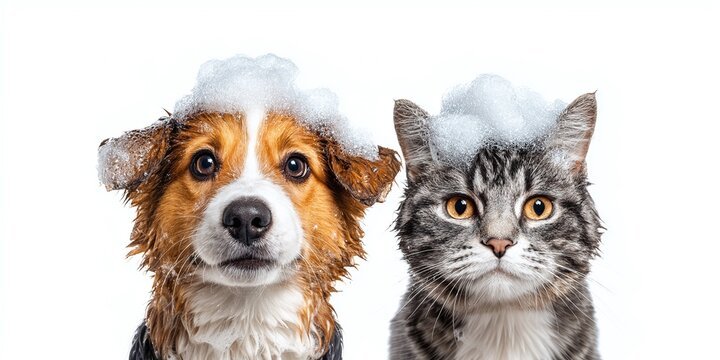
Cat grooming and dog grooming are fundamentally different due to behavior, anatomy, coat structure, and stress tolerance. Cats require precision, timing, and specialized handling techniques that make the process entirely distinct from dog grooming.
If you’ve ever wondered about the difference between cat grooming and dog grooming, you’re not alone. I get this question almost weekly usually from dog owners who just adopted their first cat and assume the process will be similar.
“Is cat grooming different from dog grooming?” they ask, often after a stressful first appointment. I used to think they were similar too until I started grooming both professionally.
On the surface, it looks comparable: bath, dry, brush, trim. But once you step into the grooming room, the reality becomes very clear. Grooming cats vs dogs is not interchangeable the tools may look similar the tables may look the same, but the psychology, anatomy, coat structure, and tolerance levels are completely different.
Grooming Cats vs Dogs Starts With Psychology
The core difference isn’t fur, it’s behavior, dogs are social pack animals, they’re wired to cooperate. Most respond to verbal cues, tolerate gentle restraint, and can work through discomfort if guided calmly.
And cats? They are solitary predators, their nervous systems are built around a powerful fight-or-flight response that wiring changes everything.
A few years ago, a client in Willow Creek brought in her golden retriever, Marley, and her gray tabby cat, Luna. Marley stood calmly on the table for 90 minutes. Luna? She hit her grooming tolerance window at 12 minutes. One second she was compliant the next she escalated.
This is why asking, “Are cats harder to groom than dogs?” misses the point. It’s not about difficulty. It’s about understanding temperament differences and respecting behavioral triggers.
Dogs typically give warning signals gradually. Cats can go from neutral to defensive in seconds. That short window means groomers must work efficiently and read subtle body language constantly.
Read Also: what happens if you don’t groom a cat
Thin Skin in Cats Changes Everything
Behavior isn’t the only factor. Anatomy plays a major role in the difference between cat grooming and dog grooming.
Cats have significantly thin skin compared to dogs. Their dermal layer is fragile, more elastic, and tears easily if handled incorrectly. They also have higher nerve density, which increases sensitivity.
I once worked with a senior orange cat named Milo from Brookfield Heights. He came in with mild matting near his hips, on a doodle, that same matting removal would be routine. On Milo, his mobility sensitivity and fragile skin required delicate blade angles and slower technique.
Dogs have thicker dermal layers and generally more forgiving skin during brushing and clipping. That doesn’t mean dogs don’t require care but it does mean technique must change dramatically between species.
This is one reason cat grooming requirements differ from dog grooming requirements. The handling precision needed for feline anatomy is simply different.
Coat Density, Growth Patterns & Maintenance
When comparing cat grooming vs dog grooming, coat structure becomes another major distinction.
Dogs come in a wide range of canine coat types:
- Curly (Poodles)
- Wire-haired (Terriers)
- Double coats (Huskies)
- Silky coats (Yorkies)
Many require breed-specific cuts, styling patterns, and regular haircuts every 4–8 weeks.
Cats, on the other hand, don’t typically receive styling cuts. Their coats grow more uniformly but long-haired breeds have extremely dense undercoats that mat quickly.
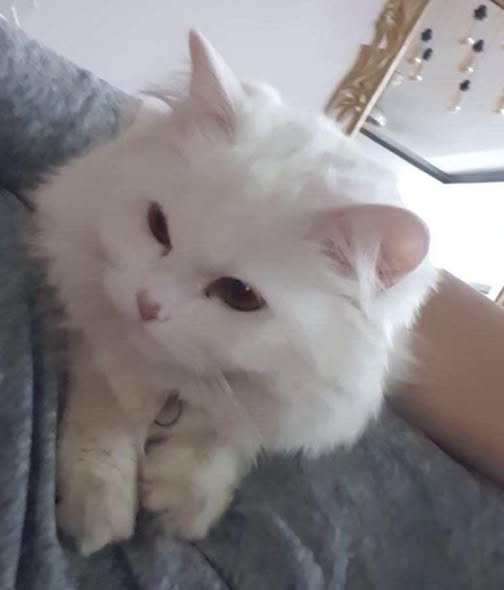
I remember grooming a white Persian named Snowbell from Maple Ridge. Her coat density differences were dramatic compared to a Poodle I groomed that same day. The Poodle needed shape and scissoring. Snowbell needed careful undercoat removal to prevent painful matting.
Cats also shed seasonally in heavy waves, their undercoat compacts close to the skin, increasing the risk of matting faster than many dog owners expect. This is why grooming frequency differences matter, dogs often groom on schedule for aesthetics, cats groom for comfort and health.
Water Tolerance & Noise Sensitivity
Bathing highlights is one of the biggest practical differences. Many dogs tolerate water some even enjoy it, a playful Labrador will shake off water and bounce back happily. Cats are biologically wired to avoid immersion, add a loud high-velocity dryer, and you introduce significant noise sensitivity.
I once bathed a calm beagle who practically leaned into the dryer. Later that afternoon, I worked with a black domestic longhair named Jasper from Oakwood Terrace. He tolerated the bath but became overwhelmed when exposed to dryer noise. Within seconds, you could see signs of sensory overload.
Because of this, cat groomers often use quieter drying methods or air-dry assistance. The approach is slower, more strategic, and based on minimizing stress. Using dog-oriented equipment without modification can increase grooming stress in cats significantly.
Why Cat Grooming Often Requires Two People
Handling is where the hidden skill gap shows up. Professional cat grooming often relies on minimal restraint techniques and cooperative care, you don’t push past tolerance. You work within it.
Efficiency matters more than perfection, a Reddit-style complaint I see often: “Why cat grooming costs more than dog grooming? It takes less time!”
Time isn’t the metric, risk and skill are.
Cat grooming requires:
- Advanced professional handling techniques
- Reading subtle stress signals
- Working within short windows
- Higher liability due to thin skin
- Increased injury risk
Sometimes two groomers are needed to maintain safety. In rare cases, especially with severe matting or extreme anxiety, sedation grooming may be required, and that moves the service into veterinary territory.
When Grooming Moves Into Medical Territory
There’s an important distinction between veterinary grooming vs pet grooming.
Pet groomers handle cosmetic and preventive maintenance. But if a cat cannot be safely groomed due to severe aggression, pain, or medical conditions, referral to a veterinarian may be necessary.
Cats are statistically more likely than dogs to require sedation for extreme matting removal. This doesn’t mean cats are “bad.” It means their restraint tolerance differs.
Sedation grooming should always be a medical decision not a convenience choice.
So… Is Cat Grooming Harder Than Dog Grooming?
Here’s the honest answer, it is not harder, it is different.
Dog grooming demands endurance, styling knowledge, and coat artistry, cat grooming demands precision, timing, and psychological awareness. When people ask about the difference between cat grooming and dog grooming, they’re usually expecting a surface-level answer about haircuts.
The deeper answer lies in temperament differences, feline anatomy, coat density differences, grooming tolerance windows, and stress thresholds. Once you understand that, the comparison stops being competitive, and starts being educational.
Why This Confusion Causes Problems
When owners assume that grooming cats vs dogs is the same, issues arise.
Common scenarios:
- Delaying cat grooming because “cats groom themselves.”
- Expecting a 90-minute session like their dog.
- Feeling frustrated when a cat groom ends early.
I once had a client in Riverbend upset that her long-haired calico’s appointment lasted only 35 minutes. But that 35 minutes was carefully timed to stay within her safe tolerance window.
Understanding that cats have different grooming requirements prevents unrealistic expectations — and protects your pet’s wellbeing.
FAQs
What is the difference between cat grooming and dog grooming?
The difference between cat grooming and dog grooming lies in behavior, anatomy, coat structure, and stress tolerance. Cats have thinner skin, shorter grooming tolerance windows, higher noise sensitivity, and different psychological wiring compared to dogs.
Is cat grooming harder than dog grooming?
It’s not about harder it’s about different skill sets. Cat grooming requires precision, speed, and advanced handling awareness, while dog grooming often requires styling knowledge and longer endurance.
Why does cat grooming cost more?
Why cat grooming costs more often comes down to specialized training, higher injury risk, shorter safe work windows, and the need for advanced handling techniques. The service is less about time and more about expertise.
Do cats need professional grooming like dogs?
Yes. While cats self-groom, they cannot prevent heavy undercoat buildup, matting, or hygiene issues entirely. Long-haired cats especially benefit from routine professional grooming an that answers the question of whether cat grooming is necessary for indoor cats.
Can the same groomer handle both cats and dogs?
Some groomers are cross-trained, but cat grooming requires specific feline-focused education. Always ask about experience with feline anatomy, cat-safe products, and handling techniques.
Final Thoughts
Cats are not difficult, but they are different from dogs. The moment you stop comparing your cat’s grooming appointment to your dog’s, everything starts to make sense. Different species, different wiring, different approach, and once you respect that difference, grooming becomes safer, calmer, and far more successful.