
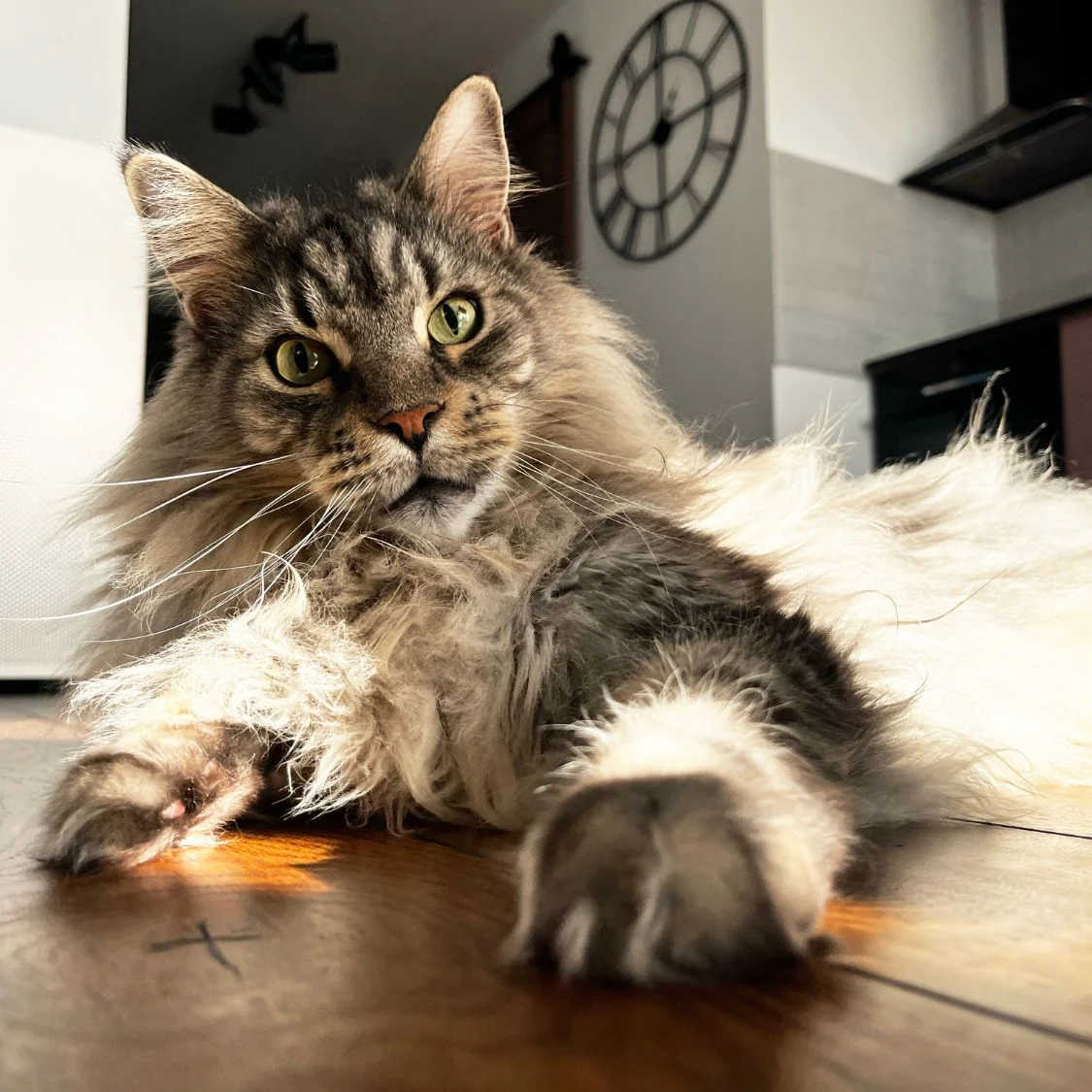
Grooming long-haired cats requires consistent brushing, the right tools, and a calm routine, especially for Maine Coons. Start early, avoid common mistakes, and set up your home so grooming becomes a stress-free habit for both you and your cat.
Why Long-Haired Cats Need Extra Grooming Care
Grooming long-haired cats is one of the biggest learning curves for new cat owners. While short-haired breeds can often manage basic coat maintenance on their own, long-haired cats need consistent help to stay comfortable, healthy, and mat-free. Without a routine, their coats tangle quickly, leading to painful mats, excessive shedding, and even skin infections.
Maine Coons are a perfect example. As one of the most popular long-haired breeds, they’re affectionate, social, and stunning but their thick, flowing coats demand more attention than many first-time owners expect. I’ve seen new owners come into grooming school overwhelmed after just a few weeks with their kitten because no one warned them how quickly fine fur can turn into knots.
This Maine Coon grooming guide breaks down exactly how to groom a long-haired cat, what tools you’ll need, how often to groom, and how to avoid the most common mistakes new owners make. If you’re planning ahead or already brushing Maine Coon fur at home, this will help you build a routine that actually works.
Why Long-Haired Cats Need Special Grooming
Long-haired cats have different coat mechanics than short-haired breeds. Their fur grows in multiple layers and lengths, which creates unique grooming challenges.
Matting risks
Mats form when loose fur tangles and tightens close to the skin. Once a mat forms, it pulls on the skin and traps moisture, which can cause irritation or infections. I once worked with a cat parent named Sofia from Henderson who brought in her silver Maine Coon, Luna, after noticing small knots under Luna’s arms. Within two weeks, those knots had tightened into painful mats that required careful removal.
Shedding cycles
Long-haired cats shed year-round, but seasonal shedding can feel overwhelming. During spring and fall, brushing Maine Coon fur daily helps prevent clumps of loose hair from collecting on furniture, and in your cat’s stomach.
Hairball prevention
When cats groom themselves, they swallow loose fur. Long coats mean more fur ingestion, which increases hairball frequency. Regular brushing dramatically reduces hairballs and digestive discomfort.
Skin health
The undercoat traps debris and oils. Without brushing, skin can’t breathe properly, leading to dandruff or irritation. Grooming long-haired cats improves circulation and keeps the skin clean and healthy.
Grooming Tools Every Long-Haired Cat Owner Should Have
Using the right tools makes grooming Maine Coon kittens and adults much easier and safer.
Slicker brush
A slicker brush gently removes loose fur and prevents tangles from forming. Use light pressure and short strokes.
Stainless steel comb
A comb reaches deeper layers of fur and helps check for hidden mats behind ears, under the belly, and near the tail.
De-matting tool
For stubborn knots, a de-matting tool can safely loosen mats without pulling on the skin. Always work slowly and stop if your cat shows discomfort.
Cat-safe grooming wipes
These are useful for quick cleanups between full grooming sessions, especially for kittens who step in litter or food.
Read Also: what cat grooming involves
How Often Should You Groom a Maine Coon?
There’s no one-size-fits-all answer, but consistency matters more than perfection.
Daily vs 3–4x per week
For adult Maine Coons, brushing 3–4 times per week is the minimum. During heavy shedding seasons, daily brushing is ideal. Grooming Maine Coon kittens should start gently, even if sessions last only a minute or two.
Seasonal shedding tips
Spring and fall are peak shedding seasons. Increase brushing frequency and consider short, calm sessions to avoid overwhelming your cat.
Grooming kittens vs adult cats
Start grooming kittens early to normalize handling. I worked with a cat parent named Daniel in Summerlin who brought his brown tabby Maine Coon kitten, Oliver, in for his first grooming session at 12 weeks. Because Daniel had already practiced gentle brushing at home, Oliver tolerated combing without fear setting him up for stress-free grooming as an adult.
Real Also: How often cats should be groomed
Common Grooming Mistakes New Cat Owners Make
Even well-meaning owners can accidentally make grooming harder.
Over-bathing
Cats don’t need frequent baths. Over-bathing strips natural oils and dries out the skin. Only bathe when truly necessary.
Using human brushes
Human brushes can damage a cat’s coat and irritate the skin. Always use cat-specific tools designed for fine fur.
Ignoring the undercoat
The undercoat is where mats form first. Skipping it means problems build beneath the surface.
Forcing grooming sessions
If your cat resists, forcing grooming creates fear. Keep sessions short and positive. A client named Renee from North Las Vegas once rushed grooming her black Maine Coon, Jasper, before work. Jasper began hiding whenever he saw a brush. We reset his routine with short, reward-based sessions and within weeks, he tolerated brushing calmly.
Read Also: What happens if you don’t groom a cat
Preparing Your Home for a Long-Haired Kitten
Setting up your home properly makes grooming long-haired cats far easier from day one.
Cat-proofing
Remove items that trap fur, like loose strings or Velcro fabrics. Create a quiet grooming spot with minimal distractions.
Setting up grooming routines early
Choose a consistent time and place for brushing. Pair grooming with treats so your kitten associates it with positive experiences.
Choosing the right breed based on coat maintenance
Long-haired breeds are beautiful but require commitment. If you’re still in the research phase and considering adopting a long-haired breed, It is important to understand grooming needs before bringing one home, especially with Maine Coon kittens for sale, which require consistent coat care from an early age.
Planning for grooming space
Keep tools visible and accessible. This makes short daily sessions more realistic than hiding supplies in a closet.
When to Use a Professional Groomer
Even dedicated owners sometimes need professional help.
Mats
Large or tight mats should be handled by trained groomers to avoid cutting the skin.
Senior cats
Older cats may have arthritis or reduced flexibility, making home grooming difficult.
Behavioral issues
Cats who panic or lash out during grooming benefit from professional handling techniques.
Health concerns
Skin infections, parasites, or wounds require expert care. A cat parent named Marcus from Downtown Las Vegas brought in his orange Maine Coon, Theo, after noticing redness beneath matted fur. Professional grooming revealed early dermatitis, which allowed for prompt treatment.
Final Thoughts
Grooming long-haired cats isn’t optional, it’s a core part of responsible pet ownership. From brushing Maine Coon fur to choosing the right tools and routines, consistency protects your cat’s comfort and health. This Maine Coon grooming guide isn’t about perfection, it’s about building habits that fit into real life.
Start early, stay patient, and adjust your routine as your cat grows. Whether you groom at home or occasionally visit a professional, your long-haired cat will feel the difference. And when grooming becomes a calm, familiar ritual, it strengthens the bond between you and your pet.